Protecting Your Home Starts With Better Water
Most people don’t give much thought to the water running through their homes. It’s there when we wake up, when we make coffee, when we shower, and when we throw another load of laundry into the machine. But water quality can quietly affect much more than what’s in your drinking glass.
Minerals, sediment, iron, and other substances can leave deposits on fixtures, affect the feel of your skin, reduce appliance efficiency, and sometimes create persistent taste or odor problems. The tricky part is that not every water issue is easy to see.
That’s why understanding your water before choosing a treatment solution is such a sensible first step. You don’t need the fanciest equipment. You need the right equipment for the problem.
What Is Really in Your Home’s Water?
Water quality can vary considerably depending on where you live and where your water comes from. Municipal supplies are treated before reaching homes, while private wells can have very different mineral and chemical characteristics.
Hard water is one of the most common concerns. It contains elevated amounts of calcium and magnesium, which can form scale on faucets, showerheads, pipes, and appliances.
Other households may deal with iron, sediment, chlorine, sulfur odors, or specific contaminants. Some issues are obvious, while others can’t be detected by taste, smell, or appearance.
A water test can reveal what’s actually happening. That information is far more useful than choosing a system based on a generic promise of “cleaner water.”
Choosing Treatment Based on the Problem
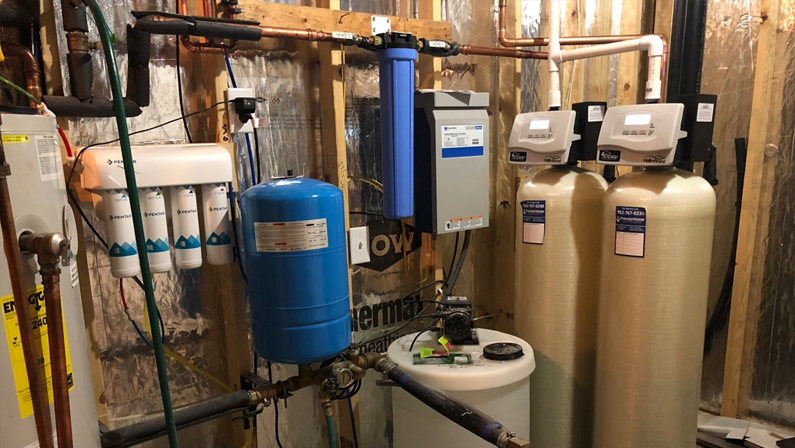
The phrase water treatment systems covers a surprisingly wide range of technologies. There are softeners, carbon filters, sediment filters, reverse osmosis units, iron-removal equipment, UV systems, and combinations of several methods.
Each has a different job.
A water softener is designed primarily to reduce hardness. Carbon filtration can improve taste and reduce certain chemicals. Sediment filtration targets particles. Reverse osmosis can reduce many dissolved substances from drinking water.
The important thing is matching the technology to the water.
It’s a bit like buying shoes. Hiking boots might be excellent footwear, but wearing them to a formal dinner isn’t exactly the point. The “best” equipment is only useful when it’s suited to the situation.
Why Hard Water Can Be Tough on Appliances
Hard water doesn’t usually cause immediate damage. Instead, the effects tend to build gradually.
Minerals can accumulate inside water heaters, dishwashers, washing machines, coffee makers, and other water-using equipment. That buildup may reduce efficiency and eventually contribute to performance problems.
This is one reason water softeners extend appliance life is more than just a catchy phrase. Reducing hardness can help limit scale formation and keep water-using equipment operating under better conditions.
Think about your water heater. It heats water day after day, and if mineral deposits collect around its heating elements or tank surfaces, efficiency can suffer. You may not notice it right away. The higher utility bill and eventual repair might be what finally gets your attention.
Of course, a softener isn’t a guarantee that every appliance will last longer. Maintenance, water temperature, usage, and equipment quality all matter. But controlling excessive hardness can be a sensible part of protecting household plumbing and appliances.
Iron Can Leave More Than a Bad Taste
Iron is another common water-quality issue, particularly in some private wells.
You may notice orange or reddish staining around sinks and toilets. Water can have a metallic taste, and freshly washed laundry may come out with marks that weren’t there before.
The challenge is that iron isn’t always present in exactly the same form. Some iron is dissolved and invisible when water first comes out of the tap but oxidizes when exposed to air. Other forms may already be present as particles.
This is where iron filters can be useful. The right iron-removal technology depends on the concentration of iron, its chemical form, pH, flow rate, and the overall water chemistry.
In other words, don’t buy an iron filter simply because the box says “removes iron.” Get the water tested first and make sure the equipment is designed for your specific conditions.
Whole-Home or Point-of-Use Treatment?
Another question homeowners often face is where treatment should happen.
A whole-house system treats water as it enters the property. This makes sense when the water issue affects showers, laundry, bathrooms, kitchen taps, and appliances throughout the home.
Point-of-use treatment focuses on one location. A reverse osmosis unit under the kitchen sink, for example, may provide additional treatment for drinking and cooking water without treating every gallon used in the house.
Neither approach is automatically superior.
If your main concern is hard water, whole-home treatment may be more practical. If your concern is a specific drinking-water characteristic, a point-of-use solution might be enough.
Don’t Overlook Maintenance
Even a high-quality treatment system needs occasional attention.
Filters need replacement. Water softeners require salt or other maintenance depending on the technology. Some systems need periodic cleaning, sanitization, or professional inspection.
Ignoring maintenance can reduce performance and shorten the useful life of the equipment.
Before buying anything, ask what routine maintenance involves. How often do filters need changing? What do replacement parts cost? Can you do basic maintenance yourself? Is professional servicing recommended?
These questions aren’t glamorous, but they can save you money and frustration later.
Installation Matters Too
A good system can perform poorly if it isn’t installed correctly.
Flow rates, plumbing connections, drain requirements, electrical access, and available space all need to be considered. Some systems also require bypass valves so that maintenance can be performed without shutting down water to the entire home.
Professional installation can be especially valuable when several treatment technologies are being combined.
And don’t forget about placement. Equipment should be accessible enough for routine maintenance. Installing a filter behind a pile of storage boxes might seem harmless on day one, but six months later you’ll wish you’d thought about it.
Look at the Long-Term Value
Price is important, but the cheapest system isn’t always the best deal.
Consider installation, filter replacements, salt usage, electricity, servicing, warranty coverage, and expected lifespan. A slightly higher upfront investment may make sense if the system is efficient and easy to maintain.
Ask providers to explain the total cost of ownership rather than focusing only on the initial price.
Most importantly, avoid pressure. You should have enough information to make a decision without feeling rushed.
Better Water Is About Better Decisions
There’s no universal answer when it comes to home water treatment. One household may need a softener, another may need iron removal, and another may benefit from a combination of filtration technologies.
The smartest approach is surprisingly straightforward: test the water, understand the results, choose equipment designed for those conditions, and keep it properly maintained.
When you get that part right, the benefits go beyond better-tasting water. You may reduce scale, protect fixtures, improve appliance performance, and simply make everyday household chores a little easier.
And sometimes that’s what good home improvement looks like—not something flashy, just a quiet improvement that keeps paying off long after the installation is finished.