Understanding Common Water Problems Before Choosing a Treatment
Water can look completely normal and still cause trouble around the house. Maybe there’s a chalky film around the faucet, reddish staining in the sink, or an unpleasant smell that seems to appear every time you turn on the tap. These problems can be frustrating, especially when you’re not sure what’s causing them in the first place.
The good thing is that many common water issues can be identified with proper testing. Once you understand what’s actually happening, choosing a treatment system becomes much less of a guessing game.
Why Water Quality Problems Happen
Water picks up different minerals and substances as it travels through the ground, pipes, and treatment systems. The exact makeup can vary considerably from one location to another.
That’s why two homes a few miles apart can have noticeably different water. One family might complain about dry-feeling skin and scale on appliances, while another might be dealing with stains or an odd smell.
Before spending money on treatment equipment, it’s worth finding out what’s behind the problem.
Understanding Water Hardness
One of the most common complaints from homeowners is Water hardness.
Hard water contains higher levels of naturally occurring minerals, particularly calcium and magnesium. It isn’t usually something you can identify just by looking at a glass of water, but its effects can become pretty obvious over time.
You may notice white deposits on faucets, shower doors, or dishes. Soap may not lather as easily, and appliances that heat water can develop mineral scale.
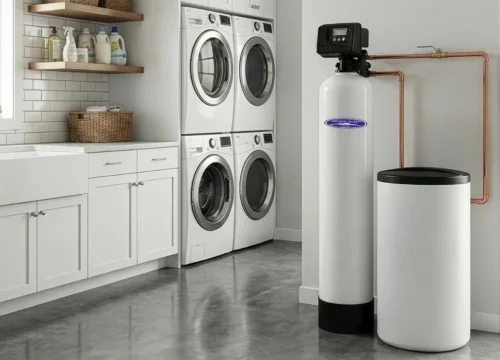
A water softener can help address hardness by reducing the minerals responsible for these effects. But it’s still a good idea to test the water first. The level of hardness matters, and so does the overall chemistry of the water.
When Iron and Manganese Become Noticeable
Iron and manganese are naturally occurring minerals that can be found in some groundwater supplies. At certain levels, they can create annoying household problems.
Iron and manganese may contribute to staining on sinks, toilets, laundry, or fixtures. Iron can sometimes produce a reddish or brownish appearance, while manganese may leave darker stains.
In some cases, the water can look clear when it first comes from the tap and develop discoloration after sitting for a while. That can be confusing if you’ve never encountered it before.
Treatment depends on the concentration and form of these minerals. Different filtration and oxidation methods may be appropriate, which is another reason water testing matters before selecting equipment.
The Trouble With Sulfur Odors
Few water problems are as immediately noticeable as a strong rotten-egg smell.
These Sulfur odors are often associated with hydrogen sulfide gas, which can occur in some well-water systems. The smell may be more noticeable when hot water is running, although it can affect cold water too.
Besides being unpleasant, sulfur-related odors can make people question whether their water is safe or suitable for everyday use.
The cause should be investigated rather than simply covered up. Depending on the source and concentration, treatment may involve filtration, aeration, oxidation, or other methods.
Sometimes the issue may also be connected to the water heater or plumbing, so looking at the whole system is important.
Testing Gives You a Better Starting Point
It’s tempting to choose a treatment system based on what you can see or smell. But those clues don’t tell the entire story.
A professional water test can provide information about hardness, iron, manganese, pH, sulfur-related compounds, and other characteristics depending on the testing performed.
That information makes the treatment decision much more practical.
For example, installing a basic sediment filter might help with visible particles but do very little for dissolved minerals. A water softener can address hardness but isn’t designed to solve every other water-quality issue.
Knowing the problem first prevents a lot of trial and error.
Don’t Assume One Filter Does Everything
There’s no universal filter that handles every water concern equally well.
Different systems are designed for different purposes. Sediment filters target particles. Water softeners address hardness. Certain specialized systems can reduce specific contaminants or improve taste and odor.
That might sound obvious, but it’s easy to get confused when product advertisements make treatment systems sound like they can solve almost anything.
Read the specifications carefully. Ask what the equipment is designed to remove or reduce, how often it needs maintenance, and what happens when the filter reaches the end of its useful life.
Maintenance Makes a Difference
Even the right water treatment system needs attention.
Filters need replacement. Media may eventually become exhausted. Tanks and components can require cleaning or inspection. Ignoring those jobs can gradually reduce performance.
A simple maintenance schedule can help. Keep track of when filters were changed and note any unusual changes in water taste, smell, color, or pressure.
If something suddenly changes, don’t automatically assume the treatment equipment is the cause. The water source, plumbing, or another household component could be responsible.
What About Well Water?
Private wells deserve particular attention because homeowners are generally responsible for monitoring their own water quality.
Well water can change over time due to groundwater conditions, weather, nearby land activity, or changes to the well itself.
Testing at appropriate intervals is a sensible habit, especially if you notice a new odor, color change, or taste.
A treatment system should be selected based on current test results rather than assumptions about what “usually” happens with well water.
Making a Smarter Treatment Decision
Water problems can seem complicated at first, but the basic approach is fairly simple: identify the problem, test the water, understand the available treatment options, and choose equipment that matches your actual needs.
Don’t let an unusual smell or stubborn stain push you into buying the first system you see. Take a breath, gather some information, and ask questions.
Good water treatment isn’t about having the biggest or most expensive setup. It’s about having the right solution for your home and your water.
Once you know what’s causing the problem, everything becomes clearer. And that little bit of knowledge can save you money, reduce frustration, and help you enjoy better water for years to come.