Why Water Testing Matters More Than Most Homeowners Realize

Water is something we use all day without giving it much thought. We drink it, cook with it, wash clothes in it, shower with it, and send it through appliances that quietly keep the household running. Because it looks clear most of the time, it’s easy to assume everything is fine.
But water can contain minerals, sediment, chemicals, or other substances that aren’t visible to the naked eye. That’s why testing your water can be a surprisingly useful step, especially if you’ve noticed changes in taste, smell, color, or water pressure.
The goal isn’t to make homeowners nervous. Quite the opposite. Testing gives you information, and good information usually makes decisions much easier.
Sometimes the Signs Are Right in Front of You
A strange taste is an obvious clue, but water-quality issues don’t always announce themselves so clearly. Maybe your showerhead keeps developing white deposits. Perhaps your laundry feels stiff even after using plenty of detergent. You might notice a metallic smell or cloudy water after turning on a faucet.
These signs don’t necessarily mean the water is unsafe, but they are worth investigating.
Even if your water looks and tastes normal, testing can still provide useful information. Some dissolved minerals and other substances have no obvious smell or color. In a private well, for example, water conditions can change over time due to seasonal conditions or changes underground.
That’s why guessing isn’t particularly helpful. Testing takes the guesswork out of the equation.
Starting With a Simple Water Check
For many homeowners, free water testing can be a convenient first step toward understanding what’s happening with their water. Depending on the provider and type of test, a basic evaluation may look at characteristics such as hardness, pH, chlorine, or other common water-quality concerns.
A basic test isn’t always the final answer, though. Think of it as a starting point. If the results show something unusual, more detailed testing may be appropriate.
This is especially useful when you’re considering installing a water treatment system. Instead of buying equipment because it sounds impressive, you can choose a solution based on the actual characteristics of your water.
That can save money in the long run. Nobody wants a piece of expensive equipment sitting in the utility room solving a problem they never had.
What a Professional Water Test Can Reveal
There are times when basic testing simply isn’t enough. If you’re dealing with a private well, unusual odors, recurring water problems, or a suspected contaminant, a more detailed evaluation may be necessary.
Professional water lab testing can examine samples for a wider range of characteristics and contaminants using controlled laboratory methods. The exact tests performed depend on the water source and the concerns being investigated.
This type of testing can be particularly valuable when making important treatment decisions. For example, if you don’t know what is causing an unpleasant taste, installing a random filter isn’t the most sensible approach.
A laboratory report gives you something much more useful: evidence.
Of course, laboratory testing isn’t something every household needs every year. The appropriate frequency depends on the water source, local conditions, and any specific concerns affecting the property.
Why Private Well Owners Should Pay Attention
People who rely on private wells have a little more responsibility for understanding their water. Municipal water systems are generally monitored and treated before distribution, while private well owners are responsible for their own water-quality checks.
Well water can change over time. Heavy rainfall, flooding, nearby construction, agricultural activity, or changes in the surrounding environment may affect groundwater conditions.
That doesn’t mean every well is problematic. Many private wells provide excellent water. Still, regular testing is a sensible habit.
If you notice a sudden change in taste, odor, or appearance, don’t simply wait for the issue to disappear. Testing can help identify whether the change is cosmetic, mineral-related, or something that requires further attention.
Choosing the Right Treatment After Testing
Once you have test results, the next question is obvious: what should you do about them?
The answer depends entirely on what the results show.
Hard water may call for a softening system. Sediment may be handled with appropriate filtration. Taste and odor problems may respond well to carbon filtration. Some dissolved substances may require more advanced treatment.
There isn’t one magical filter that removes everything. In fact, choosing treatment without knowing what you’re trying to remove can be a costly mistake.
A good water professional should explain the results in plain language. You shouldn’t need an engineering degree to understand why a particular system is being recommended.
Installation Quality Matters Too
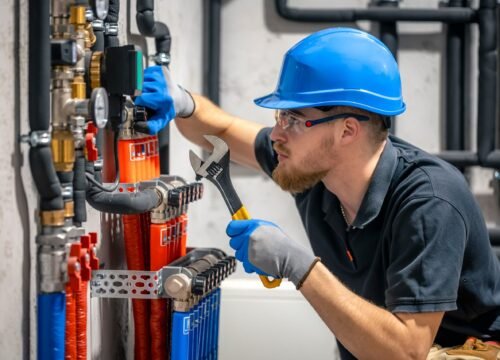
Buying the right equipment is important, but installation can be just as important. A well-designed treatment system won’t perform properly if it’s installed incorrectly or doesn’t match the home’s plumbing and water demand.
Professional installation & maintenance can help ensure the equipment operates as intended and continues doing so over time. Connections need to be secure, filters need to be accessible, and system settings need to match the property’s requirements.
Maintenance shouldn’t be forgotten either. Filters become saturated, membranes eventually need replacement, and mechanical components can wear out.
It’s a little like owning a car. Even a great vehicle needs oil changes, tire checks, and occasional servicing. Water treatment equipment is no different.
Don’t Ignore Small Changes in Water Quality
One of the easiest mistakes homeowners make is getting used to a problem. If the showerhead has always had mineral deposits, it starts to feel normal. If the water has always tasted slightly strange, you may stop noticing it.
But a change from what you’re accustomed to is worth paying attention to.
Keep an eye on your water’s appearance, taste, smell, and how it behaves around fixtures and appliances. These observations can provide useful clues, especially when combined with proper testing.
And if you’re unsure, ask questions. A trustworthy water treatment professional should be more interested in understanding the problem than selling the biggest system available.
A Little Information Can Prevent a Lot of Guesswork
Water testing isn’t particularly glamorous. There’s no exciting gadget to show off, and nobody gets thrilled about collecting a water sample. Still, it’s one of those practical steps that can make everything else easier.
Testing tells you what you’re dealing with. Professional analysis can provide deeper answers when needed. From there, the right treatment system can be selected, installed, and maintained according to actual conditions.
Ultimately, better water quality starts with understanding the water you already have. Once you know what’s in it and what needs attention, the path forward becomes much clearer. And sometimes, that simple bit of knowledge is all it takes to turn a nagging household concern into a problem with a straightforward solution.