Why Choosing the Right Water Treatment Can Make Home Life Easier
Water is one of those things we rarely think about until it starts causing trouble. A glass from the kitchen tap should be simple. A shower should leave you feeling fresh, not like you’ve just been dusted with chalk. And your washing machine, dishwasher, and water heater shouldn’t be quietly fighting a daily battle against mineral buildup.
Yet for many households, water quality is more complicated than it looks. One common issue is mineral-rich water, often called hard water. It may not always create an immediate health concern, but over time it can affect plumbing, appliances, laundry, cleaning, and even the way water feels on your skin.
The good news is that understanding the problem makes choosing a solution much easier.
What Makes Water “Hard”?
Water becomes hard when it contains elevated amounts of naturally occurring minerals, particularly calcium and magnesium. These minerals usually enter groundwater as it moves through rocks and soil. So, in some areas, hard water is simply part of the local environment.
You might notice a few familiar signs: white spots on glasses, cloudy shower doors, soap that doesn’t lather well, or a crusty layer around faucets. Sometimes the first clue is hidden inside an appliance rather than sitting in plain sight.
The issue isn’t that the water is dirty. In fact, hardness is primarily a mineral problem. Still, those minerals can become a real nuisance when they accumulate throughout a home.
The Everyday Effects of Hard Water
Living with hard water can feel like dealing with a collection of tiny household annoyances that never quite go away.
Soap and shampoo may require more effort to rinse. Clothes can come out of the washing machine feeling stiff or looking dull. Showerheads may gradually become coated with mineral deposits, reducing water flow. Even freshly washed dishes can develop spots that make them look less than sparkling.
Then there are the less visible effects.
Water heaters can develop scale on heating elements and internal surfaces. Faucets and pipes may experience mineral deposits that restrict flow over time. Appliances that use water regularly can also become less efficient when deposits build up inside them.
None of this usually happens overnight. That’s what makes the problem easy to ignore. A little buildup here, a few spots there — and suddenly you’re wondering why cleaning the bathroom has become such a chore.
Why Mineral Buildup Deserves Attention
The main culprits behind water hardness are often referred to as hardness minerals, especially calcium and magnesium. These substances occur naturally, but when their concentration is high, they can leave deposits on surfaces and inside plumbing equipment.
Think of scale as a slow-moving layer of mineral residue. Every shower, laundry cycle, and hot-water cycle adds another opportunity for deposits to form.
Hot water can make the situation more noticeable because minerals are more likely to precipitate and settle on heating surfaces. That’s one reason water heaters are often particularly vulnerable.
Over time, this buildup may affect efficiency. A water heater working through a layer of scale doesn’t necessarily operate as effectively as a clean system. Depending on the severity of the deposits, maintenance can also become more frequent.
This is why dealing with hardness early can be more practical than waiting until an appliance or plumbing component starts behaving badly.
How Water Softeners Work
For households dealing with significant mineral hardness, water softeners are one of the most established treatment options.
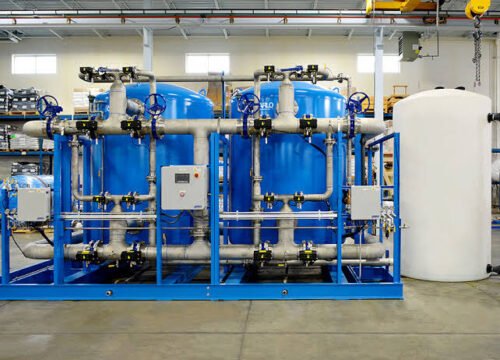
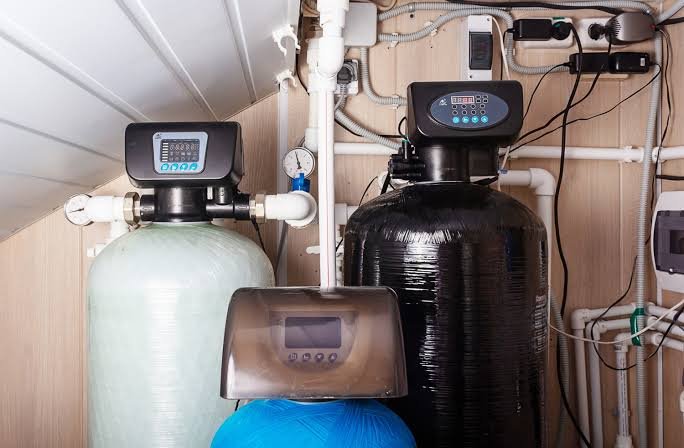
Traditional ion-exchange softeners work by replacing calcium and magnesium ions with sodium or, in some systems, potassium ions. Water passes through a resin bed inside the softener, where the hardness minerals are captured. The system periodically regenerates the resin using a salt-based solution, allowing it to continue treating incoming water.
That sounds technical, but the basic idea is pretty straightforward: reduce the minerals responsible for scale before they travel throughout your home’s plumbing.
Modern systems can be designed around household water usage, water hardness, and regeneration needs. Some also include controls that monitor consumption rather than simply running on a fixed schedule.
Of course, not every home needs the same setup. A proper water test is useful before making a decision. Guessing based only on cloudy glasses or soap scum can lead to buying a system that’s larger, smaller, or simply different from what your household actually needs.
Softening vs. Filtration: They Aren’t the Same
One common mistake is assuming that a water softener and a water filter do exactly the same job. They don’t.
Filtration systems are generally designed to reduce particular contaminants or particles. Depending on the technology, filtration can address sediment, chlorine, certain chemicals, or other unwanted substances.
Softening, on the other hand, focuses primarily on hardness minerals.
That’s an important distinction. If your biggest complaint is scale around faucets and reduced soap performance, hardness treatment may be appropriate. If you’re concerned about taste, odor, sediment, or specific contaminants, a filtration system may be more relevant.
Sometimes a home benefits from both. A treatment professional can evaluate the water and recommend a combination based on actual test results instead of selling a one-size-fits-all answer.
Choosing the Right System for Your Home
Before purchasing any water treatment equipment, start with the basics.
Get the water tested. Find out how hard the water actually is and whether other issues are present. Consider your household size, daily water consumption, plumbing layout, and the number of bathrooms and water-using appliances.
Maintenance matters too. A system that looks inexpensive initially may become frustrating if it requires constant attention or expensive replacement parts.
It’s also worth thinking beyond the kitchen sink. If hardness affects your whole plumbing system, treating only one faucet won’t solve problems with showers, washing machines, water heaters, or other fixtures.
For many homeowners, whole-house treatment makes more sense because it addresses the water entering the property rather than one individual point of use.
A Small Change That Can Affect the Whole House
Water quality isn’t always dramatic. Sometimes the signs are subtle: a shower door that never looks completely clean, laundry that feels strangely rough, or a water heater that seems to need more attention than it used to.
Those little clues are worth noticing.
The right treatment approach can make everyday chores easier, protect water-using equipment, and reduce the frustration that comes with persistent mineral deposits. But the best solution isn’t necessarily the most expensive one. It starts with understanding what’s actually in your water.
A simple water test can tell you far more than guesswork ever will. From there, you can choose treatment equipment based on your home’s real needs — and hopefully get back to thinking about water as what it should be: something you use every day without having to worry about it.