How Commercial Water Softener Solutions Help Businesses Tackle Hard Water
Water is one of those things a business can’t operate without, yet its quality is often overlooked. Restaurants use it for cooking and cleaning. Hotels depend on it for laundry, showers, and kitchens. Manufacturing facilities may run water through equipment every day. When the water contains excessive minerals, the effects can quietly add up.
For many commercial properties, commercial water softener solutions can help reduce the practical problems associated with mineral-rich water. The right system isn’t simply about making water feel different. It can help protect equipment, reduce maintenance, improve cleaning results, and make day-to-day operations a little less frustrating.
What Makes Water “Hard”?
Hard water contains elevated levels of naturally occurring minerals, primarily calcium and magnesium. These minerals aren’t usually considered a problem for drinking at typical concentrations, but they can create plenty of headaches for plumbing and equipment.
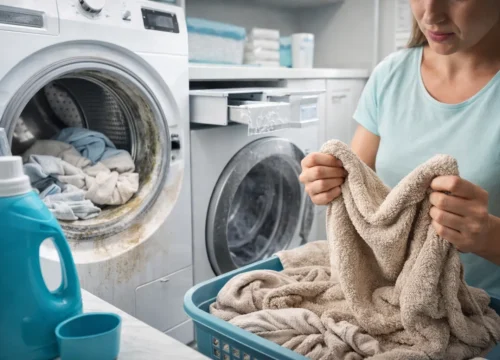
When heated, mineral-rich water can leave deposits on surfaces and inside pipes. Over time, those deposits may restrict water flow or affect the efficiency of water-using appliances.
The interesting thing is that hard water can be almost invisible. It may look perfectly clear in a glass. You often notice it through the evidence it leaves behind—spots on dishes, residue on fixtures, or deposits inside a water heater.
For a busy business, those small signs shouldn’t be ignored.
Why Hard Water Can Be Expensive for Businesses
At home, a little mineral residue may simply be annoying. In a commercial environment, the consequences can be more significant because equipment is often used much more frequently.
Think about a hotel with dozens of bathrooms or a restaurant operating commercial dishwashers throughout the day. Water heaters, coffee machines, steamers, washing machines, and other appliances may all be exposed to the same water.
When mineral deposits accumulate, equipment may require more frequent cleaning and maintenance. Efficiency can also suffer, depending on the equipment and severity of the deposits.
That creates a chain reaction: more maintenance, more downtime, and potentially higher operating costs.
Understanding Scale Buildup
One of the most common consequences of hard water is scale buildup. When calcium and other minerals precipitate from water, they can form a hard layer on heating elements, pipes, valves, and other surfaces.
Heating systems are particularly vulnerable because higher temperatures encourage minerals to come out of solution. A water heater with deposits on its heating surfaces may not transfer heat as efficiently as it should.
In a commercial property, this can become more than an aesthetic issue. Equipment that isn’t operating efficiently may consume additional energy or require more attention from maintenance staff.
Scale doesn’t appear overnight, either. It’s usually a gradual process, which is why prevention tends to be easier than dealing with severe deposits later.
How Commercial Water Softeners Work
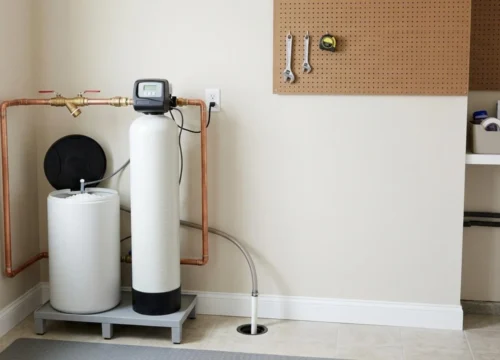
A traditional water softener typically uses an ion-exchange process. Water passes through a tank containing resin beads that attract calcium and magnesium ions. The hardness minerals are exchanged for sodium or potassium ions, reducing the water’s hardness.
Eventually, the resin becomes saturated and needs regeneration. During regeneration, the system uses a salt solution to restore the resin’s ability to remove hardness minerals.
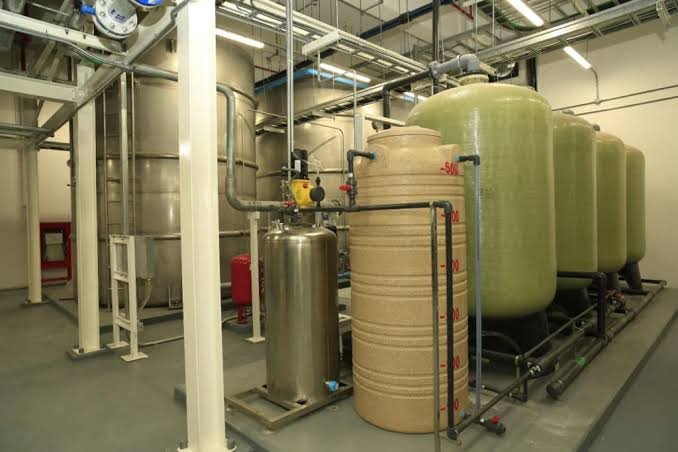
Commercial systems are designed to handle larger volumes and heavier demand than residential units. They may include larger tanks, higher flow capacities, automated controls, and configurations designed around the property’s water usage.
The correct size matters. An undersized system may struggle during periods of high demand, while an oversized system can create unnecessary costs.
Choosing the Right System for a Business
There isn’t a universal softener that works perfectly for every commercial property. Before selecting equipment, businesses should consider water hardness, daily water consumption, peak flow requirements, available installation space, and the types of equipment connected to the water supply.
A water analysis is a sensible starting point. It can provide information about hardness and other characteristics that may influence treatment requirements.
Businesses should also consider future demand. If a hotel is expanding or a restaurant is adding new equipment, today’s water usage may not represent tomorrow’s requirements.
It’s better to plan for realistic growth than discover six months later that the system can’t keep up.
Maintenance Matters More Than Most People Think
Even a well-designed water softener needs maintenance. Salt levels should be monitored, components inspected, and the system serviced according to the manufacturer’s recommendations.
Commercial operators should also keep an eye on changes in water quality or equipment performance. If spotting suddenly increases or water starts behaving differently, it could indicate a treatment problem or another issue within the plumbing system.
Regular maintenance may feel like one more item on an already long business checklist, but it can help prevent bigger disruptions later.
The Benefits Go Beyond Softer Water
The obvious benefit of a softening system is reduced hardness, but the practical advantages can extend further.
Businesses may experience fewer mineral deposits, easier cleaning, improved performance of water-using equipment, and less frequent descaling. In hospitality and food-service environments, cleaner fixtures and equipment can also contribute to a more professional appearance.
There can be comfort benefits too. Softened water often produces better soap lather and can reduce the mineral residue left behind on surfaces.
Of course, results vary depending on the water quality and the equipment being used. A softener isn’t a magic solution for every water problem. Filtration or other treatment may still be necessary for issues unrelated to hardness.
Making a Smarter Investment
Water treatment is an operational decision, not simply another equipment purchase. Businesses should look at the total cost of ownership rather than focusing only on the initial installation price.
Consider equipment costs, installation, salt consumption, water usage during regeneration, maintenance, replacement parts, and expected lifespan. A system that costs slightly more upfront may offer better value if it is appropriately sized and easier to maintain.
It’s also worth working with professionals who understand commercial water demands. Residential assumptions don’t always translate well to a busy business environment.
Better Water, Fewer Headaches
Hard water may seem like a minor inconvenience until it starts affecting expensive equipment and everyday operations. By then, the cost of ignoring it can be much higher than expected.
A properly selected commercial softening system can help reduce mineral-related problems and support the long-term performance of water-using equipment. The smartest approach is to start with testing, understand the property’s actual water requirements, and select a system based on those facts.
Good water management isn’t flashy. You probably won’t notice it when everything is working exactly as it should—and that’s kind of the point. A well-planned system quietly does its job, helping businesses spend less time dealing with water-related problems and more time focusing on what they actually do.