A Practical Guide to Better Well Water in Tampa Bay
For many homeowners, water is one of those things that stays happily in the background. Turn on the faucet, fill a glass, take a shower, and get on with the day. But when your home relies on a private well, water quality deserves a little more attention.
Well water can naturally contain minerals, sediment, iron, sulfur, and other substances that affect taste, odor, staining, or the way water behaves around your home. The water may look perfectly clear and still have characteristics you can’t see.
That doesn’t mean well water is automatically a problem. It simply means testing and understanding your water are smart parts of home ownership, particularly in an area with changing groundwater conditions.
Why Tampa Bay Well Water Can Be Different
Groundwater quality isn’t identical everywhere. Local geology, soil conditions, the depth and construction of a well, rainfall, and surrounding land use can all influence what is found in groundwater.
Some homeowners notice a metallic taste or orange staining around sinks and toilets. Others deal with hard-water scale, sulfur-like odors, or sediment. And sometimes there are no obvious signs at all.
This is why homeowners looking for well water treatment systems in Tampa Bay should begin with the water itself rather than choosing equipment based on a generic recommendation.
The right treatment depends on the actual problem.
Start With Water Testing
Testing is probably the least exciting part of water treatment, but it may be the most useful. Think of it as getting a basic health check for your water system.
A free basic water testing option can be a convenient starting point for homeowners who want to learn more about their water before making a larger investment. Depending on the provider and test, basic testing may look at factors such as hardness, pH, iron, sulfur, chlorine, or other water-quality characteristics.
A basic test doesn’t necessarily answer every possible water-quality question. For specific concerns, additional laboratory testing may be appropriate. Still, having some information is much better than guessing.
Hard Water and Mineral Buildup
Hard water is common in many areas and can be particularly frustrating around the house.
Water hardness comes mainly from dissolved minerals such as calcium and magnesium. These minerals can leave white deposits on faucets, shower doors, dishes, and plumbing fixtures. You may also notice that soap doesn’t seem to rinse as cleanly as you’d expect.
Over time, scale can build up inside water-using appliances and plumbing components. Water heaters, dishwashers, washing machines, and coffee makers can all be affected.
A water softener may be appropriate when hardness is the primary concern. But again, testing first helps confirm whether hardness is actually the issue.
What About Iron and Sulfur?
Iron is another concern homeowners with private wells sometimes encounter. Even relatively small amounts can create unpleasant staining on sinks, toilets, tubs, and laundry.
Sulfur can create a distinctive rotten-egg-like smell. It’s certainly not something you want lingering in your morning shower.
Different treatment technologies are designed for different water-quality issues. Depending on the test results, treatment may involve filtration, oxidation, carbon media, softening, aeration, or other methods.
There isn’t a one-size-fits-all solution. The best setup is the one matched to the water entering your home.
The Importance of Safe Drinking Water
Most homeowners want the same basic thing: safe, clean water for drinking, cooking, bathing, and everyday household use.
For drinking water, it’s especially important not to rely solely on appearance or taste. Some water-quality concerns cannot be identified by looking at a glass of water.
Private well owners should follow appropriate testing recommendations for their area and circumstances. If there’s a change in taste, odor, color, or other characteristics, investigate it rather than assuming it’s harmless.
Water treatment can improve specific quality characteristics, but treatment should be based on identified needs and appropriate testing.
Whole-House or Point-of-Use Treatment?
Once you understand your water, you’ll need to decide how much of the home should be treated.
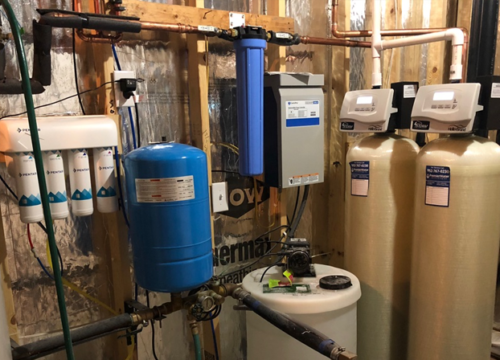
Whole-house treatment systems are installed where water enters the property and are designed to treat water throughout the home. This can be useful when the concern affects bathing, laundry, plumbing, and other household uses.
Point-of-use systems, such as under-sink filtration or reverse osmosis, focus on water from a particular faucet. These may make sense when drinking and cooking water are the main priorities.
Neither approach is automatically better. It depends on your goals, water quality, household size, and budget.
Don’t Forget About Maintenance
A water treatment system isn’t a magic box that can be installed and forgotten.
Filters eventually become saturated. Softener systems require maintenance. Certain treatment equipment needs periodic inspection or media replacement. Ignoring these tasks can reduce performance and may even create new problems.
Keep records of when filters are changed and when the system is serviced. It sounds boring, yes, but a five-minute reminder on your phone can save you from discovering six months later that you’ve completely forgotten about maintenance.
Look Beyond the Initial Price
Cost matters, but the purchase price is only one part of the equation.
When comparing systems, think about installation, replacement filters, maintenance, electricity or water usage where applicable, and expected lifespan. Ask how often components need replacement and whether service is readily available.
A cheaper system that requires frequent attention may cost more in the long run. On the other hand, the most expensive system isn’t automatically the best choice either.
The sweet spot is a properly sized system that addresses your actual water-quality concerns without unnecessary complexity.
A Smarter Way to Manage Well Water
Well water doesn’t have to be mysterious. Start by learning where your water comes from and what may influence its quality. Test it periodically, especially when circumstances change, and pay attention to unusual odors, staining, taste, or appearance.
From there, choose treatment based on facts rather than assumptions. Whether the issue is hardness, iron, sulfur, sediment, or another concern, the right technology can make everyday water management considerably easier.
Ultimately, good well-water care is about being proactive. You don’t have to obsess over every drop that comes from the tap. Just understand your water, maintain your equipment, and take changes seriously.
A little attention today can help prevent bigger headaches tomorrow—and make the water flowing through your home feel a whole lot more dependable.